

If you’re in real estate and not using Pinterest yet, you’re missing out on something big. And here’s the thing – most agents haven’t figured this out yet, which means there’s still time to get ahead.
Pinterest isn’t just another social media platform. It’s actually a visual search engine where people actively look for homes, design ideas, and neighborhood info. With over 450 million users searching every month, many of them are exactly the clients you want: educated, affluent women between 25-54 who are ready to buy or sell.
Why Pinterest works for properties
Think about how people use Instagram versus Pinterest. On Instagram, you’re scrolling to kill time. On Pinterest, you’re searching for something specific – like “homes in Denver” or “moving to Orlando.” These people are in research mode, which means they’re much closer to making a decision.
Plus, here’s the cool part: your pins keep working for you long after you post them. Unlike a Facebook post that disappears in a few hours, a Pinterest pin can drive traffic to your website for months or even years. It’s like planting seeds that keep growing.
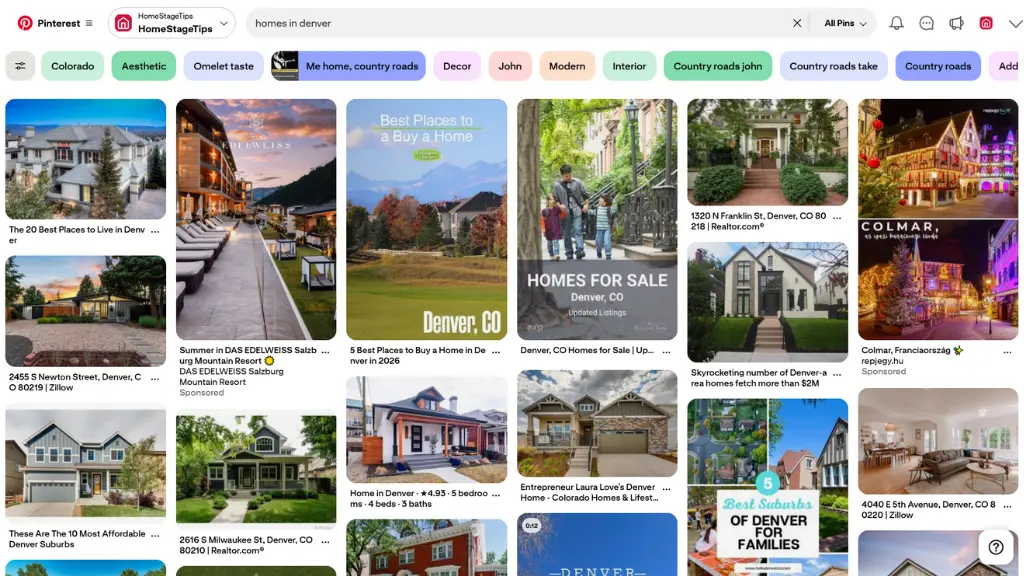
Pinterest search result: “homes in Denver”
Setting up your Pinterest profile right
First, you need a business account (not a personal one). This gives you access to analytics and advertising tools that personal accounts don’t have. The setup is straightforward – just head to Pinterest.com and convert your account or create a new business profile.
Your profile should clearly show what you do and where you work. Include keywords like “real estate agent in [your city]” in your bio because Pinterest’s search works like Google. People need to be able to find you.
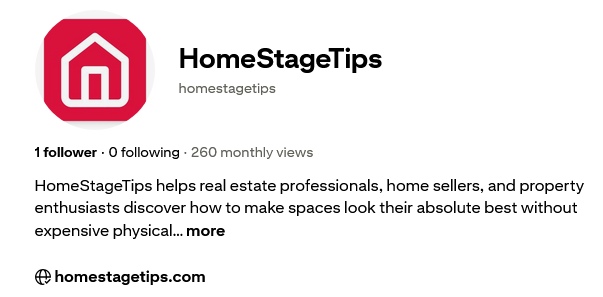
Sample Pinterest profile: HomeStageTips
Creating boards that actually work
Your boards are how you organize everything. Think of them as categories that make sense to your potential clients.
Some board ideas that perform well:
- Apartment living
- Backyards
- Home selling checklists
- Creative home offices
- Home design tips
- Dining rooms
The key is to use searchable titles. “Beautiful Kitchens” is nice, but “Kitchen Design Ideas for Denver Homes” is better because it includes location and specific keywords.
Each board needs a good description too. Use natural language but work in relevant keywords. If someone searches “buying a home in Austin,” you want your board to show up.
The content you should actually post
Here’s where most agents get it wrong. They treat Pinterest like an MLS listing dump. Please don’t do that.
Your content should focus on being helpful and educational. Answer the questions your clients always ask. Here are content types that work:
- Educational pins: Create graphics about the buying process, mortgage tips, how to prepare for a home inspection, or local market updates. These get saved and shared because they’re actually useful.
- Neighborhood guides: Show off the areas you work in – not just houses, but coffee shops, parks, schools, and local events. This positions you as the local expert.
- Video content: Turn property tours into short video pins. Pinterest loves video, and it gets way more engagement than static images. You can also create quick tip videos or neighborhood tours.
- Infographics: These perform really well. Break down complex topics like closing costs or the steps of selling a home into simple, visual formats.
- Lifestyle content: Show what living in your area looks like. Pin local events, seasonal activities, and community highlights.
The secret is creating evergreen content – stuff that stays relevant for months or years, not just until a property sells.
Making your pins actually get seen
Pinterest rewards quality and consistency. Aim for at least 30 pins per month, which sounds like a lot but breaks down to about an hour per week.
Your images need to be vertical (Pinterest recommends 1000 x 1500 pixels). Horizontal images get cut off and don’t perform as well. Make sure your photos are high-quality and well-lit. Blurry or dark images won’t get engagement.
Every pin needs a good description with keywords. Think about what someone would search for and naturally include those terms. Hashtags work too, but don’t go crazy – 3 to 5 relevant ones per pin is enough.
Use text overlays on your images so people know what they’re looking at while scrolling. Something like “3 Tips for Selling Your Home Fast” or “Hidden Gems in Downtown Miami” catches attention.
The smart way to use listings
Yes, you can post listings, but do it strategically. Instead of just posting every listing you have, focus on ones with special features or unique selling points.
When you do post a listing, make multiple pins from it:
- One highlighting the kitchen
- One showing the master bedroom
- One featuring the outdoor space
- One about the neighborhood location
Each pin should link back to the full listing on your website. This gives you multiple chances to capture interest from different search terms.
Tools that make your life easier
You’ll want to check out IACrea if you haven’t already. It’s an AI tool designed specifically for real estate marketing that can transform empty spaces into beautifully staged rooms in seconds. Instead of paying thousands for traditional staging, you can create professional-looking images in about 30 seconds.
You can also turn your property photos into dynamic videos – which is huge for Pinterest since video pins get significantly more engagement. IACrea lets you schedule and post content across multiple social platforms too, which saves you from manually posting everywhere.
For learning more about Pinterest marketing strategies, check out PinBlueprint.com. While it focuses on affiliate marketing, the Pinterest strategies work for any type of marketing – including real estate.
Getting traffic from Pinterest to your website
Every pin should link somewhere. Usually that’s your website, a blog post, or a specific listing page. The goal is to drive qualified traffic to places where you can capture leads.
Here’s a proven funnel that works:
- Someone finds your pin about “buying a home in [city]”
- They click through to your blog post or real estate advertisement
- They become a lead by requesting more information or contacting you about a property
This is why having good content on your website matters so much. Your pins are the bait, but your website content is what converts visitors into leads.
Timing and consistency
Pinterest isn’t an overnight success platform. You’re not going to post a pin on Monday and get a client by Friday. This is a long-term strategy that compounds over time.
In the first three months, you’ll see gradual growth in impressions and clicks. After 3-6 months, you should see more consistent traffic. After six months, your results really start to add up because your older pins are still working while you add new ones.
The key is staying consistent. Keep pinning regularly, refine your strategy based on what works, and don’t give up after a few weeks.
What not to do
A few things to avoid:
- Don’t only post listings: You’ll bore people and won’t build the authority you need.
- Don’t ignore SEO: Pinterest is a search engine. Use keywords naturally in your titles, descriptions, and board names.
- Don’t use bad photos: Blurry, dark, or poorly composed images won’t perform no matter how good your description is.
- Don’t forget to engage: Reply to comments, follow relevant accounts, and repin content from others. It’s called social media for a reason.
- Don’t skip analytics: Check your Pinterest analytics regularly to see what’s working and adjust your strategy accordingly.
Measuring what matters
Your main goals should be:
- Growing your impressions (how many people see your pins)
- Increasing outbound clicks (people visiting your website)
Use Pinterest analytics and add UTM parameters to your links so you can track exactly how much traffic Pinterest sends you and what those visitors do on your site.
The bottom line
Pinterest works for real estate, but you need to approach it differently than other platforms. It’s about providing value, answering questions, and building authority—not just pushing listings.
The agents who succeed on Pinterest are the ones who treat it like a search engine, create helpful evergreen content, and stay consistent over time. The platform favors those who regularly post quality content and engage with their audience.
Start simple: set up your business account, create a few well-organized boards, and begin posting helpful content. Even just 30 minutes a week can start building momentum.
The best part? Most real estate agents still aren’t doing this, which means you have a real opportunity to stand out and capture attention from qualified buyers and sellers who are actively searching for help.
Get started today, stay consistent, and watch your Pinterest presence grow into a reliable source of website traffic and leads.