
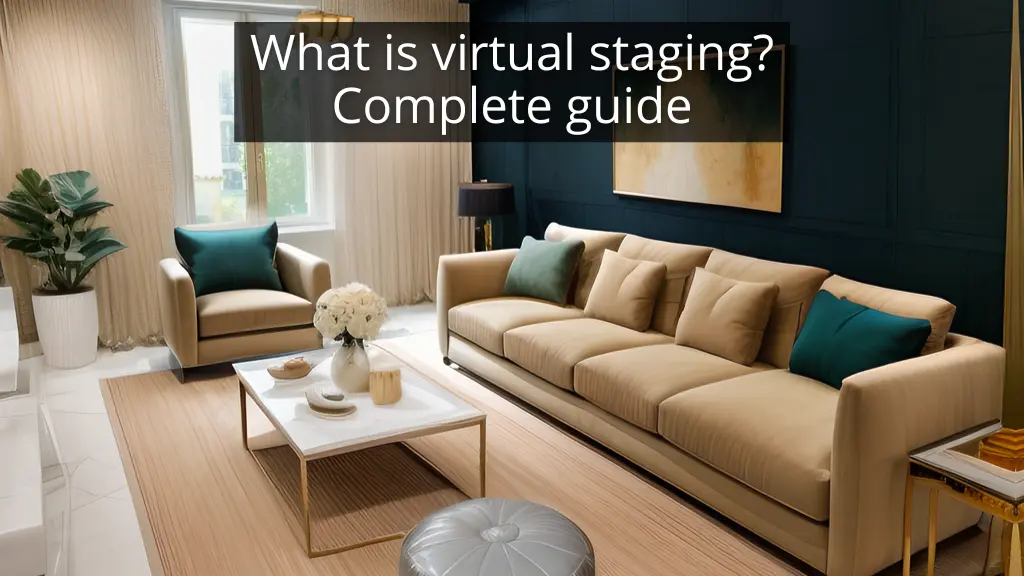
Remember the last time you looked at an empty apartment or house? Kind of hard to picture yourself living there, right? Your brain struggles to imagine where the couch would go, how cozy the bedroom could be, or whether your dining table would even fit.
That’s exactly the problem virtual staging solves.
What virtual staging actually is
Virtual staging takes photos of empty (or outdated) rooms and digitally adds furniture and decor to them. Think of it like Photoshop, but specifically for real estate.
A graphic designer takes your empty room photo and adds realistic-looking furniture, rugs, artwork, and accessories. The result? Pictures that help buyers see the space’s potential without moving a single piece of physical furniture.
The technology has gotten really good lately. Modern virtual staging software creates images that are almost impossible to tell apart from traditional staging, with furniture that’s properly scaled and strategically placed to highlight the space.
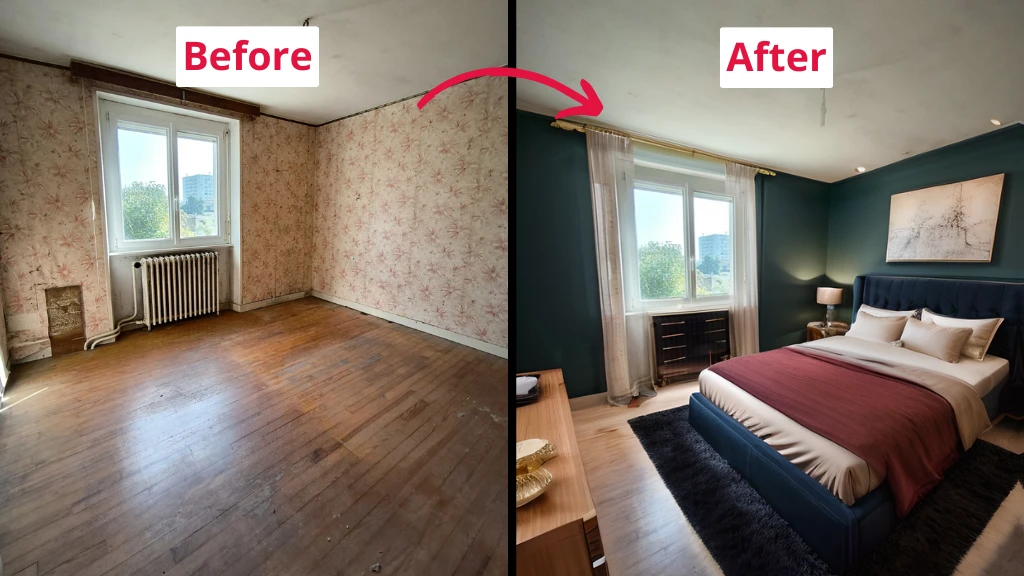
Room photo generated by IACrea
How it works (spoiler: it’s pretty simple)
The process is straightforward:
- Take clear photos of your empty or furnished space
- Upload them to a virtual staging platform
- Choose your style (modern, farmhouse, luxury, etc.)
- Wait 20 seconds
- Download your staged photos
Some platforms like IACrea work incredibly fast. You upload your photo, pick your options, and your staged image appears in about 20 seconds. Other services might take a day or two but often include more customization options.
Why people use virtual staging
The money factor
Traditional staging costs an average of $6,000, and can run up to $25,000 or more. You’re paying for furniture rental, movers, storage, and the stager’s time.
Virtual staging? Most services charge between $20-40 per photo. IACrea offers monthly plans starting around €29 that include multiple images. That’s a massive difference.
Speed
Physical staging takes time. You need to schedule consultations, coordinate movers, wait for furniture delivery, and arrange setup. The whole process typically takes 7-14 days.
Virtual staging can be done in hours or even seconds. Upload in the morning, have staged photos by afternoon.
No hassle
Physical staging means people traipsing through your house, moving furniture around, and storing your existing stuff somewhere. Virtual staging? You take some photos and you’re done.
Flexibility
Want to see the living room in three different styles? Easy. Need to make the bedroom look bigger? No problem. Traditional staging locks you into one look. Virtual staging lets you experiment.
What you can do with virtual staging
Virtual staging isn’t just about adding a couch to an empty living room. Here’s what else it can do:
- Furnish empty spaces – The most obvious use. Vacant homes sell for an average of $11,306 less and spend 6 more days on market compared to staged homes.
- Update dated rooms – Replace that 1980s floral couch with modern furniture without touching anything physical.
- Virtual renovations – Show how a space would look with new countertops, paint colors, or flooring.
- Declutter – Remove personal items, excess furniture, or anything that makes the space look cramped.
- Outdoor staging – Add patio furniture, fix up landscaping, or make the backyard look inviting.
- Show multiple styles – Create versions of the same room in different design styles to appeal to different buyers.
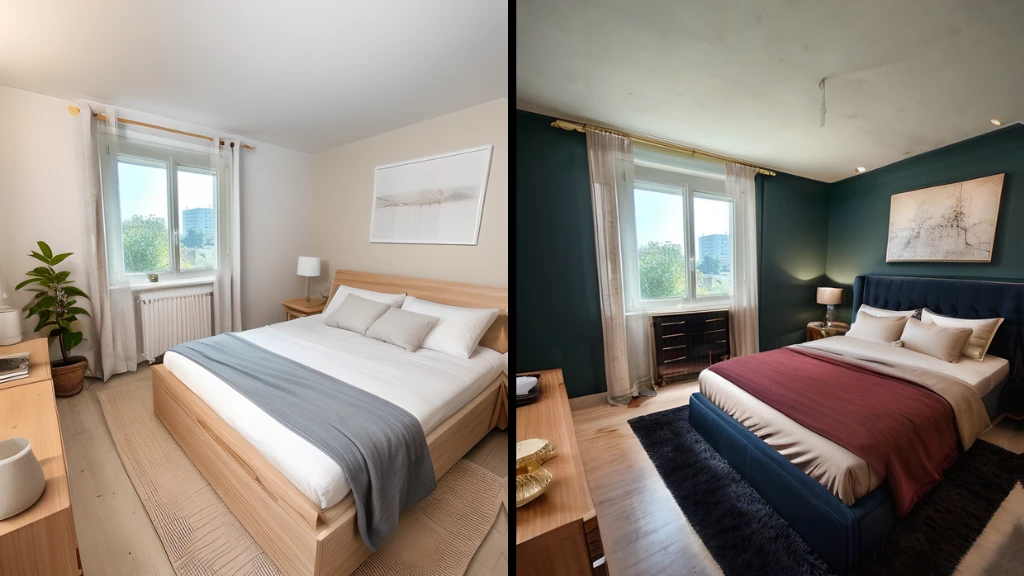
Room photos with Ai
The real results
Staged listings sell 75% faster than unstaged ones, and 85% of staged properties sell for asking price or above. These numbers apply whether you use physical or virtual staging.
The key is helping buyers visualize themselves in the space. Most buyers have trouble imagining what an empty or poorly furnished space could become. Staging solves that problem.
The downsides you should know about
Virtual staging isn’t perfect. Let’s be honest about the limitations.
- The space is still empty – When buyers show up for a viewing, they’ll see an empty room. The photos help them visualize, but they can’t sit on a virtually staged couch.
- Quality matters – Cheap virtual staging looks fake. Really fake. And fake-looking photos can actually hurt your listing more than help it. You need to use quality services that create realistic images.
- You must disclose it – This is important. You can’t just post virtually staged photos without telling people. Include both staged and unstaged photos in your listing, and mention virtual staging in the description. Being sneaky about it is unethical and could be illegal.
- Not for every situation – High-end luxury properties might still benefit more from physical staging, especially for in-person showings and open houses.
Virtual staging vs Traditional staging
Here’s the honest comparison:
Traditional staging wins when:
- You’re selling luxury properties where the in-person experience matters most
- You’re hosting frequent open houses
- Budget isn’t a concern
- You have time to wait for setup
Virtual staging wins when:
- You’re working with tight budgets
- The property is vacant
- You need photos fast
- You want to show multiple design options
- Most buyers will see the listing online first
Many real estate agents now use a hybrid approach: virtual staging for online listings, then print out the staged photos and display them during in-person showings. Best of both worlds.

A nicely decorated room gets more clicks (made with IACrea)
How to use virtual staging effectively
If you decide to go the virtual staging route, here’s how to do it right:
- Start with good photos – Virtual staging can’t fix bad photography. Clean the space, use good lighting, and take clear, well-composed photos.
- Be transparent – Always, always disclose that photos are virtually staged. Add watermarks if possible. Include both staged and unstaged versions.
- Keep it realistic – Don’t stage a 10×10 bedroom to look like a palace. Keep furniture appropriately sized and styled for the actual space.
- Consider your audience – Staging a home for young professionals? Go modern and minimal. Family neighborhood? Show a kid-friendly layout.
- Display during showings – Print your virtually staged photos and display them during in-person visits. This helps connect the virtual vision with the physical space.
Choosing a virtual staging service
You’ve got plenty of options out there. Here’s what to look for:
Speed – Some services work in seconds (like IACrea’s 20-second turnaround), others take 24-48 hours. Pick based on your timeline.
Quality – Look at examples. The furniture should look realistic, properly scaled, and naturally lit to match the room.
Price – Most services charge per image. Watch out for hidden fees or required subscriptions if you only need occasional staging.
Features – Some services only add furniture. Others can do renovations, decluttering, color changes, and outdoor staging. IACrea, for example, offers furniture staging, virtual renovations, object removal, and even sky replacements.
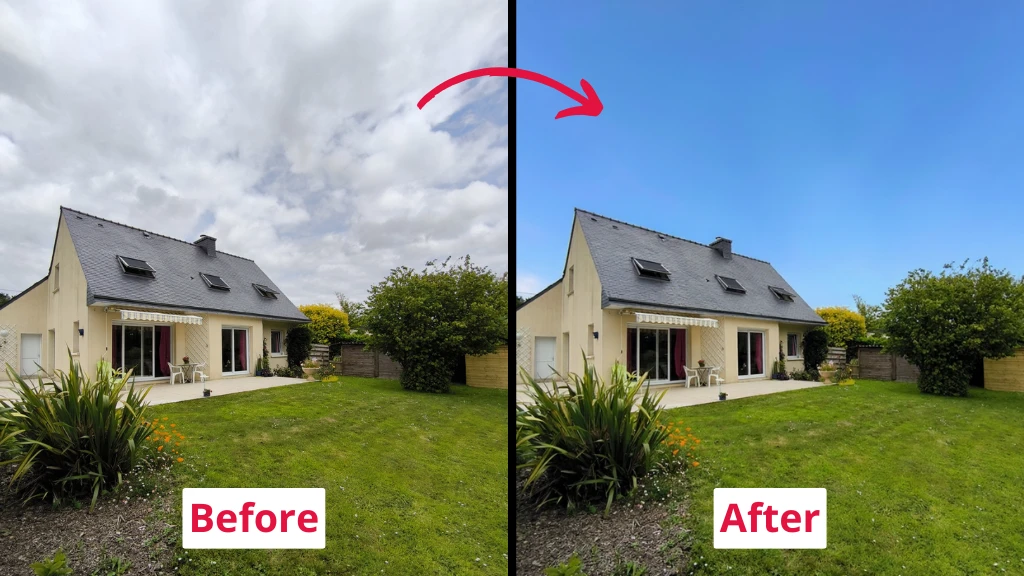
Sky replacement